What Is Asset Progression?
Many homeowners reach a point where they start asking bigger questions about their future. Should I upgrade? Is my current property still the right fit for my family? Am I making the most of the home I've worked so hard for? Most importantly, what should my next move be?
Asset progression is the process of making strategic property decisions over time so that each move supports your long-term financial and lifestyle goals. Rather than viewing property as a one-time purchase, it treats every property decision as part of a larger journey—whether that's upgrading from HDB to private property, building an investment portfolio, creating greater financial flexibility, or planning for retirement.
In Singapore's property market, decisions are influenced by factors such as CPF usage, loan eligibility, ABSD regulations, Minimum Occupation Period (MOP) requirements, and changing market conditions. A well-planned strategy can help homeowners avoid costly mistakes, make informed decisions, and position themselves for future opportunities.
My role is not simply to help you buy or sell a property. It's to help you understand your options, evaluate the trade-offs, and create a clear roadmap that allows you to move forward with confidence.
How I Help Clients Make Confident Property Decisions
Every homeowner's situation is different. That's why I don't believe in one-size-fits-all recommendations or pushing the latest market trend. My role is to help you understand your options, evaluate the trade-offs, and build a strategy that's aligned with your goals, finances, and future plans.
The 5-Point New Launch Advisory Framework
Evaluating a new launch property requires more than just looking at floor plans and showflat aesthetics. Jamus employs a disciplined, analytical framework to uncover the true fundamentals that dictate long-term value and investment resilience.
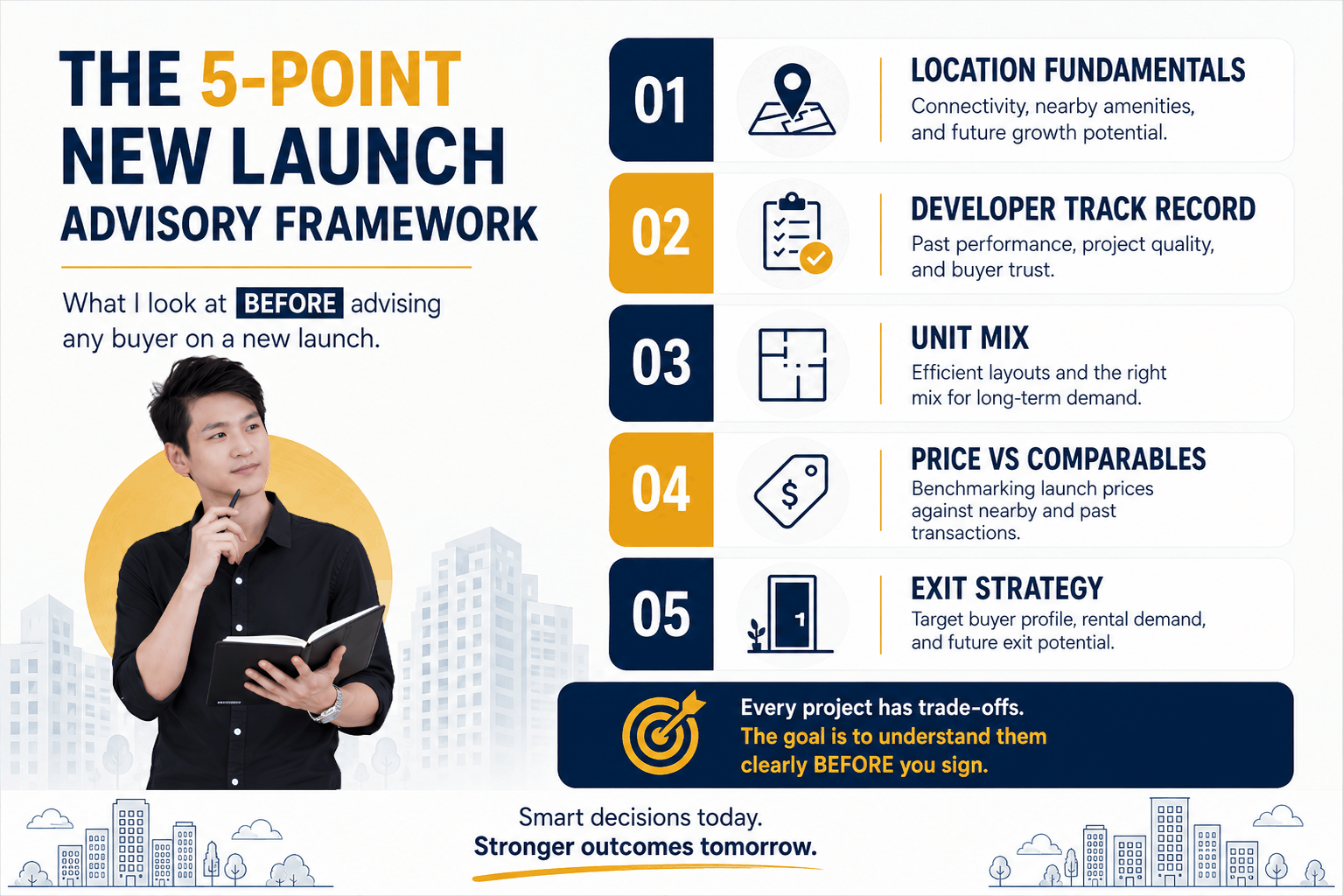
The framework focuses on five critical pillars: Location Fundamentals (beyond just MRT proximity), Developer Track Record, Unit Mix Analysis, Price vs. Comparables, and a clearly defined Exit Strategy. By stress-testing every project against these criteria, we ensure your entry is backed by data, not just developer marketing.
Who I Typically Help
Every homeowner's situation is unique, but many of the people I work with are facing similar questions. They aren't necessarily looking for another property—they're looking for clarity on what the right next move should be.
The Step-by-Step HDB Selling Guide
Selling your HDB flat is one of the most significant financial decisions you will make as a Singapore homeowner. The process is layered, and navigating it requires a clear strategy to maximize your returns and avoid a compressed timeline.
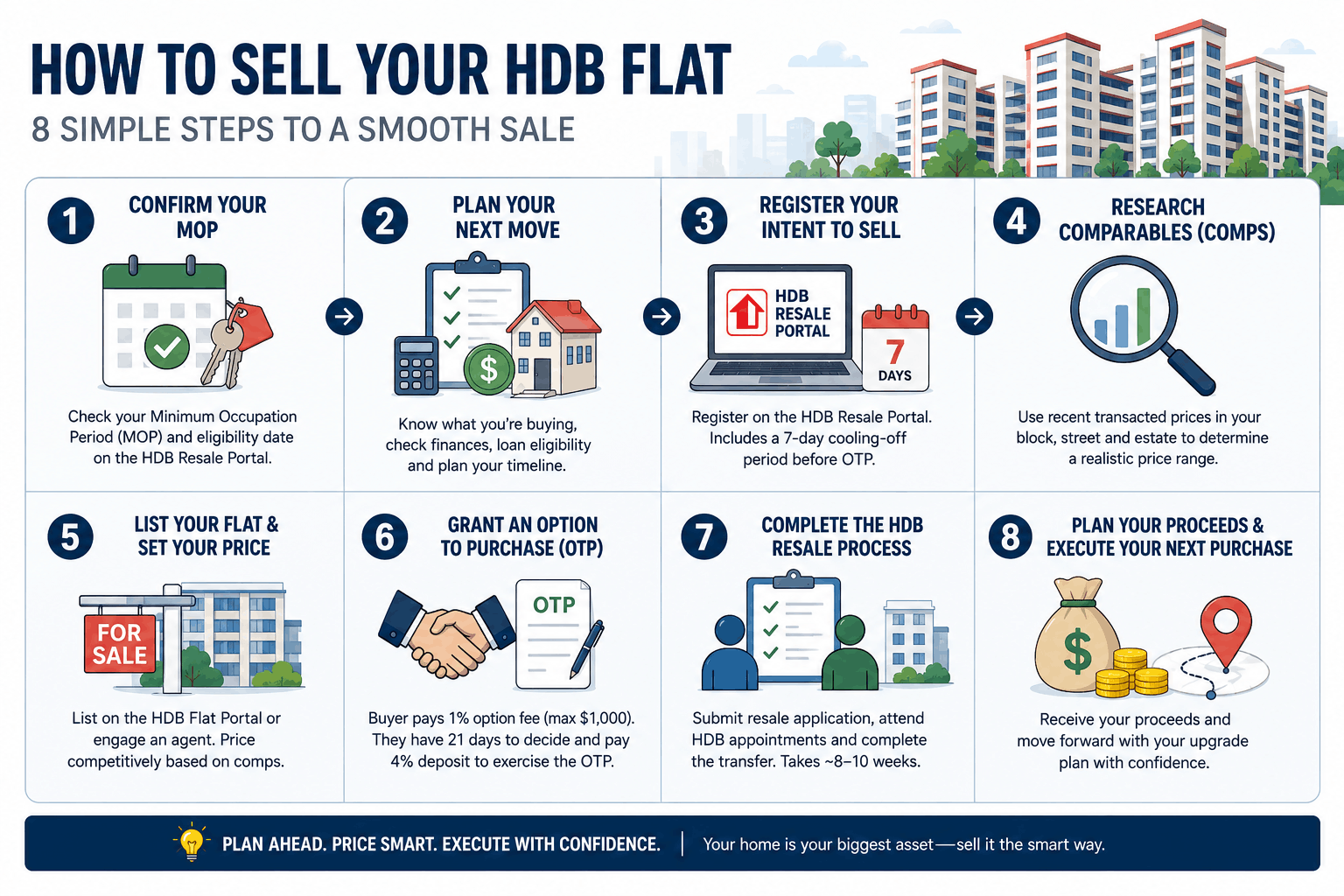
Our comprehensive guide walks you through the entire resale journey. We focus on crucial steps including verifying your Minimum Occupation Period (MOP), researching Comparable Transactions, managing the OTP process, and planning your Next Upgrade before you even list. By mapping out your timeline and finances, we ensure you move with confidence, not guesswork.
Case Study 1: The EC Launchpad
Understanding the theory of asset progression is one thing; seeing the numbers in practice is another. This case study follows a dual-income household that leveraged their executive condominium to move into a city-fringe private property with zero additional cash outlay.
Turning an EC Into $490K Equity Without Touching Savings
How one couple in their early thirties used the 5-year MOP period as a compounding engine to multiply their initial capital more than six times over.
Case Study 2: The Freehold Upgrade Path
Understanding the theory of asset progression is one thing; seeing it applied to real-world dilemmas is another. This case study follows a family from Sengkang who navigated the transition from an HDB flat to a freehold private property with clear financial parameters and confidence.
From HDB Uncertainty to Freehold Confidence
How one family moved from wondering "Are we too late?" to securing a freehold home that made sense on every dimension—functional layout, tenure, location, and financial headroom.