Why Lentor Gardens Residences Is Worth Your Attention in July 2026
Lentor Gardens Residences is the seventh private residential launch in the Lentor precinct since 2022. That is either a red flag or a vote of confidence, depending on how you read it.
I read it as a vote of confidence — with caveats. Six consecutive launches in the same precinct, all selling at 99% or above, tells you that genuine demand exists. It also tells you that the precinct narrative has been tested in the market and has held. By the time Lentor Gardens Residences launches, this will not be a developer selling you a vision of what Lentor could become. It will be a developer selling you a position in a precinct that has already demonstrated it can clear inventory.
That is a different proposition from launching into an untested estate. It is also a different risk profile. The upside is lower than it was for the first movers who bought Lentor Modern in 2022. The downside is also more contained.
Whether that trade-off works for your specific situation — your budget, your timeline, your property goals — is what the rest of this article addresses.
Pillar 01: Location Fundamentals
Rating: STRONG
The MRT Story Is Already Proven, Not Promised
The single most important thing to understand about Lentor as a location is that the transport infrastructure is not aspirational. Lentor MRT station on the Thomson-East Coast Line opened in 2022. Residents are already using it. That matters because buying ahead of a confirmed MRT opening is a very different proposition from buying ahead of a planned one. The execution risk is gone.
From Lentor MRT, you reach Orchard in approximately 20 minutes without any transfer. The CBD at Shenton Way takes around 28 minutes on the same line. For professionals working in the financial district, in one-north, or in the Orchard corridor, Lentor sits at a commutable distance that would have been difficult to justify before the TEL.
What adds a further layer of interest is the upcoming Woodlands connection. Three stops north on the TEL brings you to Woodlands Regional Centre, which is Singapore's most strategically significant employment node outside the CBD. The Johor Bahru RTS Link, targeted to open by end-2026, connects directly from Woodlands — meaning Lentor residents will have a viable commute path to JB without a car. That is not a small thing if you are thinking about rental demand from professionals with cross-border work arrangements.
The North-South Corridor Changes the Road Picture Too
Less discussed but worth flagging: the North-South Corridor Phase 1, Singapore's longest and first integrated transport expressway, is scheduled to reach the Lentor area from 2027. When operational, it provides direct express-bus connectivity from the north into the city without traffic signal stops. For a precinct that currently has strong MRT access but limited road alternatives during peak hours, this adds a meaningful second option.
Precinct Transformation That Is Already Visible
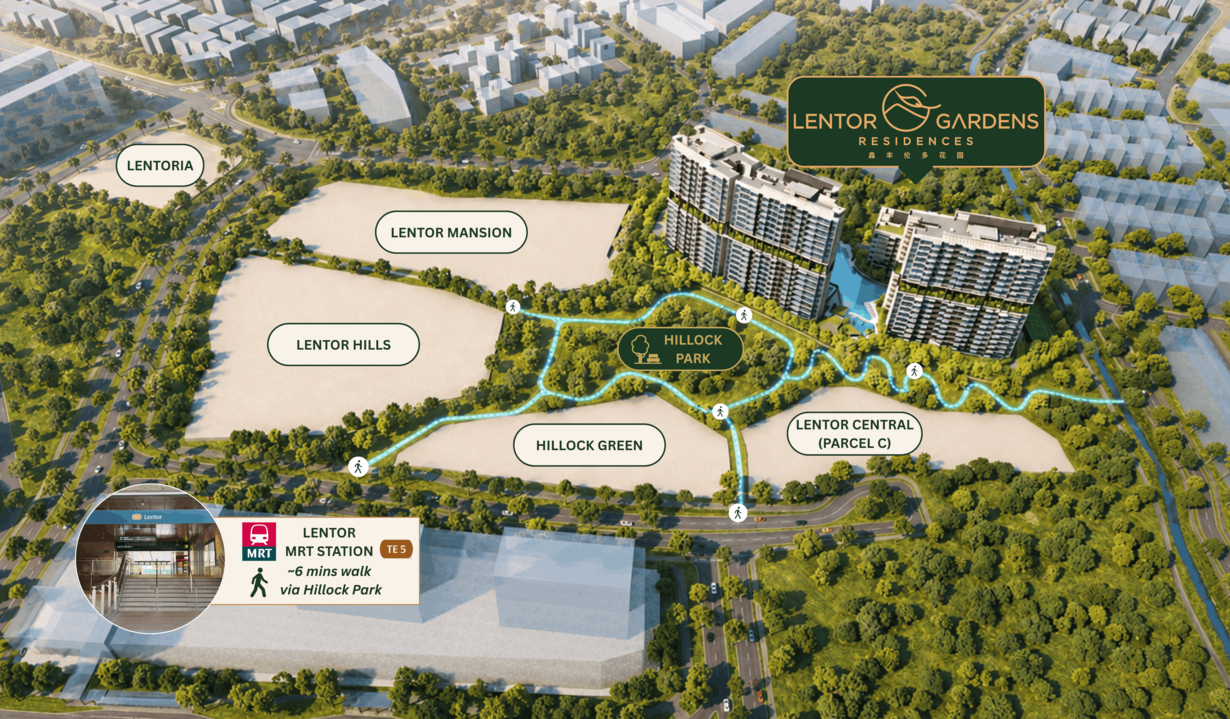
The Lentor precinct in 2026 looks materially different from 2022. Lentor Modern, the first launch, has an integrated mall with a supermarket, F&B outlets, and a childcare centre at its base. That commercial nucleus now serves the entire cluster. Subsequent launches have benefited from amenities they did not have to build.
Lentor Gardens Residences includes its own 129 sqm of commercial space and an Early Childhood Development Centre within the development. This is not a major commercial component — it is one or two neighbourhood retail units and a childcare provider. But it reinforces own-stay liveability for young families, which is the dominant demand profile in this precinct.
What I look for in a transforming precinct is whether the transformation requires you to trust a government plan, or whether it requires you to look at what has already been built. In Lentor's case, by mid-2026, it is mostly the latter. That meaningfully reduces the speculative risk that characterised the first one or two launches in the cluster.
The Honest Limitation on Location
Lentor is not and will not be a prestige address. It is a well-connected, well-planned OCR residential precinct. Buyers coming from RCR addresses or looking for the cache of a District 10 or 11 postcode will not find it here. The relevant comparison is not Lentor versus River Valley — it is Lentor versus Bishan, versus Sengkang, versus Sembawang. On that basis, the location holds up very well.
Pillar 02: Developer Track Record
Rating: MEDIUM
Who Is Kingsford, and Why Does It Matter?
Kingsford Development is a Singapore-based developer that has completed two significant residential projects locally: Hillview Peak in District 23 (512 units, completed 2016) and Waterbay in District 19 (1,165 units, completed 2018). Neither project carries the brand premium of Singapore's top-tier developers, but both have delivered product that functions and has transacted reasonably in the resale market.
For buyers considering Lentor Gardens Residences, the honest assessment is this: Kingsford is not a developer whose name will work in your favour at the resale counter. When a buyer in 2033 is choosing between your Lentor Gardens unit and a comparable unit in a CapitaLand or UOL project, the developer brand will not give you a pricing edge. That does not make it a bad project — it makes it a project where the location and the product specification have to do the work, rather than the developer's name.
The good news is that, for this specific launch, the product specification has a meaningful differentiator that is independent of the developer's brand.
The Non-PPVC Advantage Is Genuinely Significant
Lentor Gardens Residences is the only project in the Lentor cluster that is post-harmonized and non-PPVC — meaning it does not use Prefabricated Prefinished Volumetric Construction. Every other Lentor launch has used PPVC to varying degrees.
What does this mean for you as a buyer? PPVC construction involves factory-built volumetric modules that are craned into position on site. It delivers speed and consistency, but it means that most internal walls are structural and cannot be removed or significantly altered after handover. You take the layout as delivered.
Non-PPVC construction — conventional reinforced concrete — means that internal non-structural walls can be demolished and reconfigured. Buyers who want to combine rooms, open up a kitchen, create a home office, or adapt the layout to a life change after TOP have the flexibility to do so. In the context of a 99-year leasehold asset that a family may hold for 15 to 20 years, that flexibility has real value.
This is not a theoretical advantage. It is a concrete, practical differentiator relative to every other Lentor launch.
The architect for the project is P&T Consultants, a well-regarded Singapore practice with a track record across multiple residential and commercial developments. Their involvement is a positive signal on design quality.
What Buyers Should Know About Developer Rating
A MEDIUM rating on developer track record does not mean the developer is problematic. It means buyers should make their purchase decision based on the project's merits — location, layout, price, and exit strategy — rather than on faith that the Kingsford brand will carry value at resale. For most buyers, that is a reasonable approach. For buyers who are extremely risk-averse about resale liquidity and want a developer whose name functions as a buffer, this project may not be the right fit.
Pillar 03: Unit Mix
Rating: MEDIUM
The Honest Picture on Unit Distribution
This is the pillar where I want to give you an unvarnished view, because the marketing narrative around Lentor Gardens Residences will likely emphasise its family-friendly credentials without fully unpacking what the unit mix implies.
The confirmed breakdown from the official distribution table is as follows:
- 2-Bedroom (all variants): 252 units — 50.5% of the development
- 3-Bedroom (all variants): 139 units — 27.85%
- 4-Bedroom (all variants): 105 units — 21.04%
- Strata Terrace: 3 units — 0.6%
At first glance, the fact that 3-bedroom and above accounts for approximately 49% of the project looks healthy. For an OCR launch, that proportion of family-sized units is genuinely above average when compared to investor-heavy projects that front-load 1-bedroom and compact 2-bedroom stock.
But here is what the 50.5% 2-bedroom weighting actually means in practice: at TOP in December 2030, approximately 252 units of similar 2-bedroom product will simultaneously enter the resale and rental market. That is a meaningful concentration of supply in a single unit type, in a precinct where six earlier projects — including Lentor Modern with 605 units, Lentor Hills Residences with 598 units, and Hillock Green with 474 units — will also have reached or be approaching TOP around the same window.
It is worth being clear about what this implies. It does not mean 2-bedroom units at Lentor Gardens will not sell or rent. It means that 2-bedroom buyers in this project will face more competition from comparable stock at the point of exit than 3-bedroom or 4-bedroom buyers will. The resale and rental runway for larger units is cleaner.
What the Unit Mix Does Right
There are two things the unit mix gets right that are worth noting.
First, there are no 1-bedroom or studio units in the project. The smallest unit is a 2-bedroom at 646 sqft. That is a deliberate product decision that signals the developer was not targeting short-term investors looking for the smallest possible quantum. Every unit in this development is sized for genuine own-stay use or for a tenant who needs more than a single room.
Second, the 4-bedroom units at 1,184 to 1,356 sqft are well-proportioned for the price point. Buyers looking for a genuine family-sized home in the OCR — four bedrooms, functional living area, space for a helper's room — will find layouts here that work in practice, not just on a floor plan.
How to Use This Information
If you are a 2-bedroom buyer, go in with eyes open on the exit. Your unit will be one of 252 similar products entering the market at the same time, in a precinct where thousands of units across six other projects will also be available. That is not a reason not to buy — it is a reason to buy at the right price, with the right hold period in mind, and with a clear rental strategy for the years between TOP and resale.
If you are a 3-bedroom or 4-bedroom buyer, the competitive picture at exit is meaningfully better. The supply concentration risk is lower, and the demand from genuine family upgraders — who are less price-sensitive than investor buyers — provides a more stable exit pool.
Pillar 04: Price versus Comparables
Rating: CONFIRM
Final pricing has not been confirmed by the developer ahead of the 4 July 2026 preview. The figures below are analyst estimates and publicly available market data. They are provided as a benchmark framework, not as confirmed launch pricing.
The Land Cost Story
The most structurally important pricing fact about Lentor Gardens Residences is the developer's land cost. Kingsford acquired the Lentor Gardens GLS site at approximately S$920 per square foot per plot ratio. That is the lowest land cost in the Lentor cluster by a meaningful margin.
For context, Lentor Central Residences — one of the later Lentor launches — was acquired at approximately S$1,278 psf ppr, a gap of around S$358 psf ppr. That difference in land cost flows directly into the developer's pricing floor. A developer who paid more for land cannot price below that cost without destroying margin. A developer who paid less has more flexibility.
This is not a guarantee that Lentor Gardens Residences will launch cheaply. Developers regularly price to the market rather than strictly to cost. But it does mean that the structural pricing floor for this project is lower than for more recent Lentor launches, which is a meaningful advantage for buyers who are sensitive to entry price.
What Existing Lentor Resale Data Tells Us
Lentor Modern — the first and most commercially mature project in the cluster — has been generating resale transactions since early 2025. Based on transactions through to the first quarter of 2026, 2-bedroom units have been transacting in the range of approximately S$2,473 to S$2,582 psf. 3-bedroom units have transacted in the range of approximately S$2,450 to S$2,500 psf.
Analyst estimates for Lentor Gardens Residences indicative launch pricing are in the range of S$2,050 psf at the lower end, with an estimated average across unit types of approximately S$2,350 psf. If those estimates prove accurate at the 4 July preview, buyers would be entering at a meaningful discount to current Lentor Modern resale prices — purchasing a newer, un-lived-in unit below the cost of a comparable resale product in the same precinct.
That is a credible value proposition, and it is a direct consequence of the lower land cost.
What to Watch at the Preview
The key number to track on 4 July is the average launch psf across 2-bedroom and 3-bedroom units, benchmarked against the Lentor Modern resale data above. If the launch comes in at or below the current Lentor Modern resale market, the price-to-exit gap is credible and the entry is defensible. If it launches significantly above those benchmarks, the case for buying on price weakens considerably and I would want to reassess.
The second number to watch is the quantum. A 2-bedroom at 646 sqft priced at S$2,050 psf produces an all-in quantum of approximately S$1.32 million before stamp duties. A 3-bedroom at 969 sqft at S$2,350 psf is approximately S$2.28 million. These are the absolute amounts that buyers need to model against their TDSR position and their available capital.
Pillar 05: Exit Strategy
Rating: STRONG
Who Buys This Unit in 8 to 10 Years?
This is the question I consider most important, and the one most buyers skip when they are standing in a showflat making a decision under time pressure.
For Lentor Gardens Residences, the exit thesis has two distinct components depending on unit type.
For 3-bedroom and 4-bedroom buyers, the primary exit buyer is an HDB upgrader from the Ang Mo Kio, Bishan, or Yishun estates. These are established HDB towns with large flat populations, many of which were built in the late 1990s and 2000s. Based on MOE data and HDB completion records, a significant volume of flats in these estates will reach their 30-year mark between 2028 and 2035 — the window when upgraders typically move into private property. HDB upgraders are among the most reliable buyers for OCR private condominiums. They are motivated by genuine lifestyle upgrade, they have equity from their HDB sale, and they typically have household incomes and CPF positions that allow them to absorb OCR new launch pricing. The proximity of Lentor to their existing communities — same schools, same amenities, familiar MRT line — makes it a natural target.
For 2-bedroom buyers, the exit pool is broader but also more competitive, as noted in the unit mix section. The most likely buyers at exit are younger professionals or couples, investors purchasing for rental income, or smaller families downsizing from 3-bedroom product. The rental market for 2-bedroom units in Lentor is likely to remain active — the TEL connectivity, the proximity to the AMK employment catchment, and the childcare and commercial amenities make the precinct appealing to young professional renters. But rental yield will be a function of supply, and supply will be substantial across the cluster at TOP.
The Precinct Maturation Effect
One of the underappreciated aspects of buying a later launch in an emerging precinct is what the neighbourhood looks like at your exit point, not at your entry point.
When the first Lentor buyers walked into their Lentor Modern units in 2025, they were moving into a precinct that was still largely a construction site. The precinct's eventual character — its retail mix, its park connections, its community feel — was unknown.
When Lentor Gardens Residences reaches TOP in December 2030, it will open into a neighbourhood that has been operational for five years. Multiple projects will be settled, the Lentor Modern mall will be a proven commercial hub, Lentor Hillock Park will be a known quantity, and residents will have a lived sense of what the precinct is. Buyers considering a resale purchase in 2031 or 2032 are not being asked to imagine a future — they are evaluating a present reality. That is typically a more confident buying environment, and it tends to support resale pricing.
The Supply Risk You Need to Plan For
The honest risk in the exit strategy is the 2028 to 2031 window when multiple Lentor projects will be reaching or approaching TOP simultaneously. When that many units enter the resale and rental market in a concentrated timeframe, buyers and tenants have choices. Vacancy periods may extend. Resale buyers will negotiate harder.
This is not a fatal flaw in the exit thesis — it is a market cycle reality for any precinct that has seen rapid development activity. The right response is to plan for it. Investors who enter Lentor Gardens Residences expecting to sell at a profit in 2031 into a supply-saturated market may be disappointed. Investors who plan a hold period of 8 to 10 years — allowing the supply cycle to clear and the next cohort of HDB upgraders to come through — are working with the market rather than against it.
The exit is strong for long-term holders with the right profile. It requires active planning for anyone with a shorter horizon.
Section 06: The Questions Buyers Rarely Ask
Before you commit to any new launch, there are a handful of questions that rarely come up in showflat conversations but consistently turn out to matter.
What is the car park ratio? Lentor Gardens Residences has 402 car park lots across two basement levels for 499 units — a ratio of approximately 0.8 lots per unit. For an OCR family-oriented development, that is adequate but not generous. Families with two cars should factor this in, particularly once you account for visitor lots being outside the resident allocation.
What is the maintenance fee likely to be? With 499 units across five blocks and a full suite of communal facilities including a pool, gym, and function rooms, the monthly maintenance contribution will be a genuine recurring cost. Estimates are not confirmed at this stage, but buyers should budget for this in their total cost of ownership calculation.
What does the surrounding land bank look like? Lentor is a GLS precinct, which means there are additional sites that have not yet been released. Future launches in the precinct will add new supply. This is both a sign of continued government commitment to the area and a supply consideration for future buyers and tenants. It is not a reason not to buy — it is context for setting realistic expectations about exit competition.
Which stacks are affected by construction noise from adjacent sites? Until the Lentor precinct is fully built out, stacks facing active construction sites will have noise and dust exposure. This is temporary, but for buyers who will be living in the unit from TOP, understanding which stacks face completed projects versus ongoing construction matters.
My Advisory Position on Lentor Gardens Residences
After applying all five pillars of the framework to this project, here is where I land.
This is a project I would recommend seriously considering for the right buyer profile. The location is genuinely strong — a proven, not speculative, precinct narrative, with MRT infrastructure already operational and meaningful government investment still flowing in. The product has a concrete differentiator in its non-PPVC construction. The pricing, if it lands where analyst estimates suggest, represents a credible entry relative to the established resale benchmarks in the cluster.
The buyer profiles I believe are most naturally aligned with this project:
Owner-occupying families or couples who want a well-connected OCR address, value the flexibility of non-PPVC construction for future renovation, and plan to hold for at least eight years. HDB upgraders from the AMK, Bishan, or Yishun corridors who want to stay within their community catchment. Long-term investors with a 10-year horizon who are comfortable with an OCR leasehold product and are targeting the family rental segment.
The buyer profiles I would want to think more carefully with before recommending:
Buyers seeking a short hold of five years or fewer — the supply cycle at TOP works against a quick exit. Buyers who are stretching financially to reach the quantum and have limited buffer for a period of lower rental yield or softer resale conditions. Buyers who are primarily motivated by developer brand and want that brand to function as a pricing buffer at resale.
On the 2-bedroom unit mix: I want to be transparent here. A 50.5% 2-bedroom weighting is not what I would call an ideal family-occupier unit mix — it is a mixed project that skews toward smaller units. 2-bedroom buyers are purchasing into a competitive supply environment at TOP. That does not make 2-bedrooms the wrong choice, but it makes price discipline at entry more important, and it makes a longer hold period more important.
How to Approach the 4 July Preview
If you are attending the Lentor Gardens Residences preview, here is what I would suggest you focus on.
Know your absolute quantum before you walk in. The showflat experience is designed to be immersive and momentum-building. If you do not have a clear upper limit in your head before you enter, you will be making financial decisions under conditions that are not designed to help you think clearly.
Ask for the full price list across all unit types before you look at any specific unit. Understanding the full pricing landscape — including which stacks and facings carry premiums — allows you to assess relative value within the project rather than evaluating each unit in isolation.
Benchmark the launch psf against the Lentor Modern resale data before deciding. If the launch price on your preferred unit type is above current Lentor Modern resale psf, ask yourself what the justification is. A new unit with fresh fittings and a long lease remaining should carry some premium over resale — but that premium has a ceiling, and it is worth knowing where you think that ceiling is before someone asks you to sign.
Think about your exit before you book. Visualise who your buyer is in 2033 or 2034. Are they a young family from AMK with HDB equity? A professional couple looking to upsize? A corporate tenant looking for a rental home near the MRT? If you can describe that person clearly, you have an exit thesis. If you cannot, take more time.
Summary: Five Points, Honest Assessment
| Pillar | Rating | One-line Summary |
|---|---|---|
| Location Fundamentals | STRONG | Proven precinct, TEL operational, transformation underway |
| Developer Track Record | MEDIUM | Non-PPVC differentiator; no developer brand premium at exit |
| Unit Mix | MEDIUM | No 1BRs; but 50.5% 2BR creates exit supply concentration |
| Price vs Comparables | CONFIRM | Land cost advantage; final psf confirmed at 4 Jul preview |
| Exit Strategy | STRONG | HDB upgrader pipeline strong; plan for 8–10 year hold |
If you are tracking Lentor Gardens Residences and would like to apply this framework to your specific situation — your current property, your budget, your timeline, and your exit profile — I am happy to work through it with you before the preview. My role is not to sell you this project. It is to help you decide whether this project makes sense for where you are trying to go.
The goal is not to find you a unit. It is to find you an asset that someone else will want to buy in ten years — and to understand clearly why.
Project Gallery
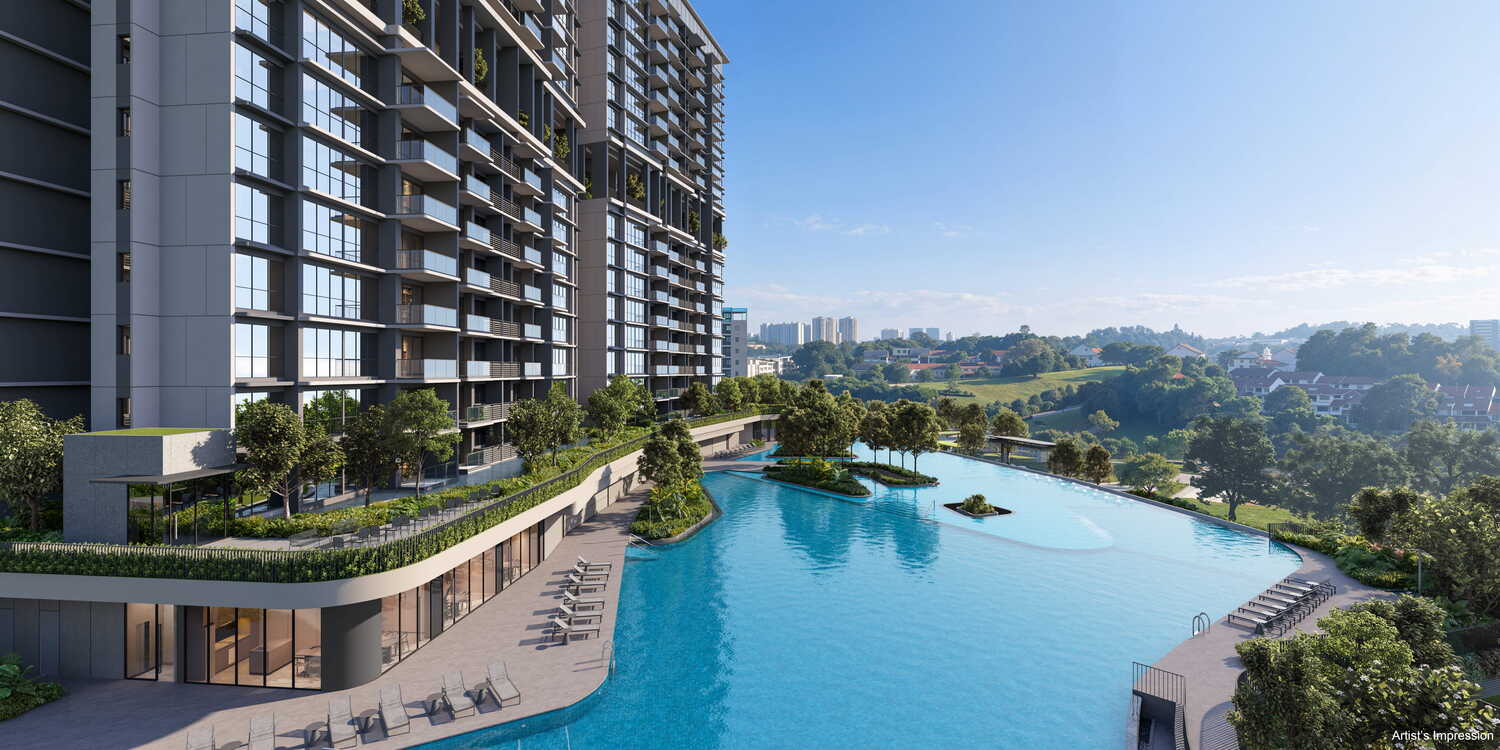
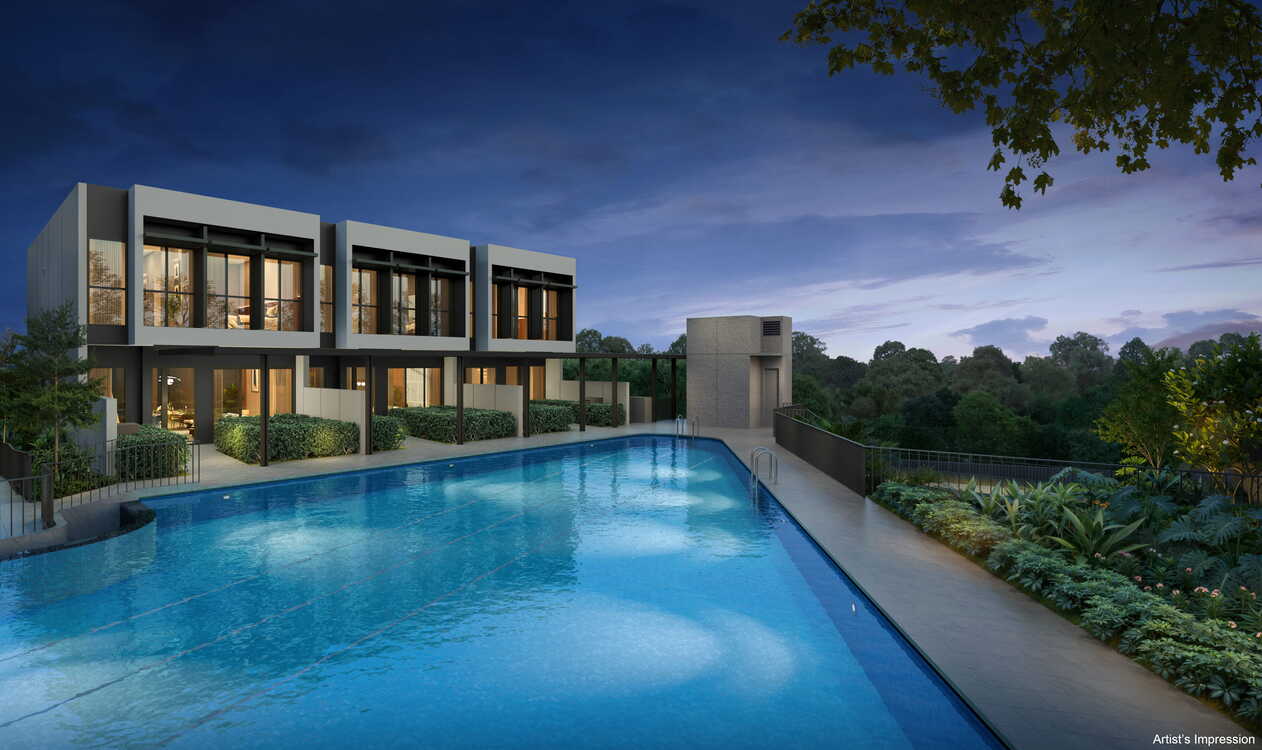
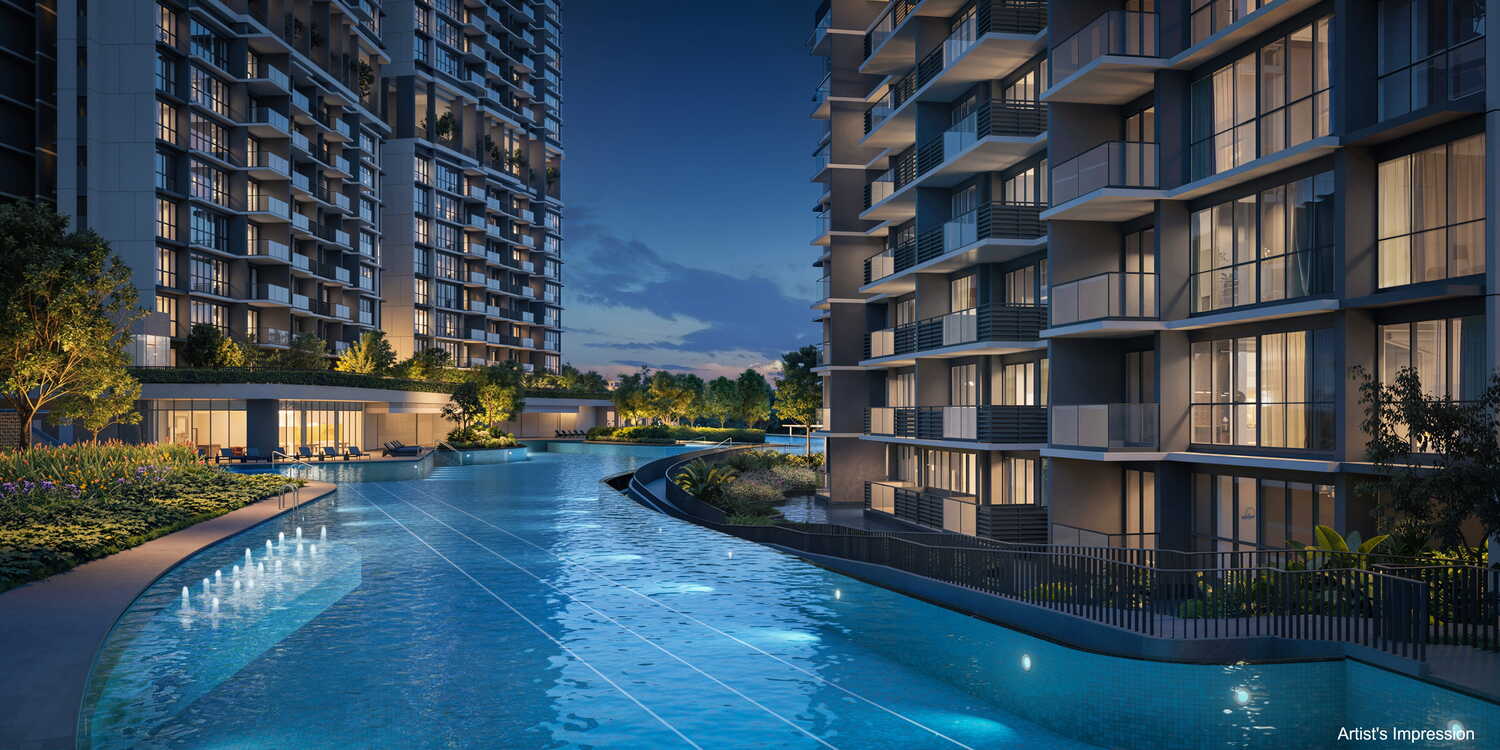
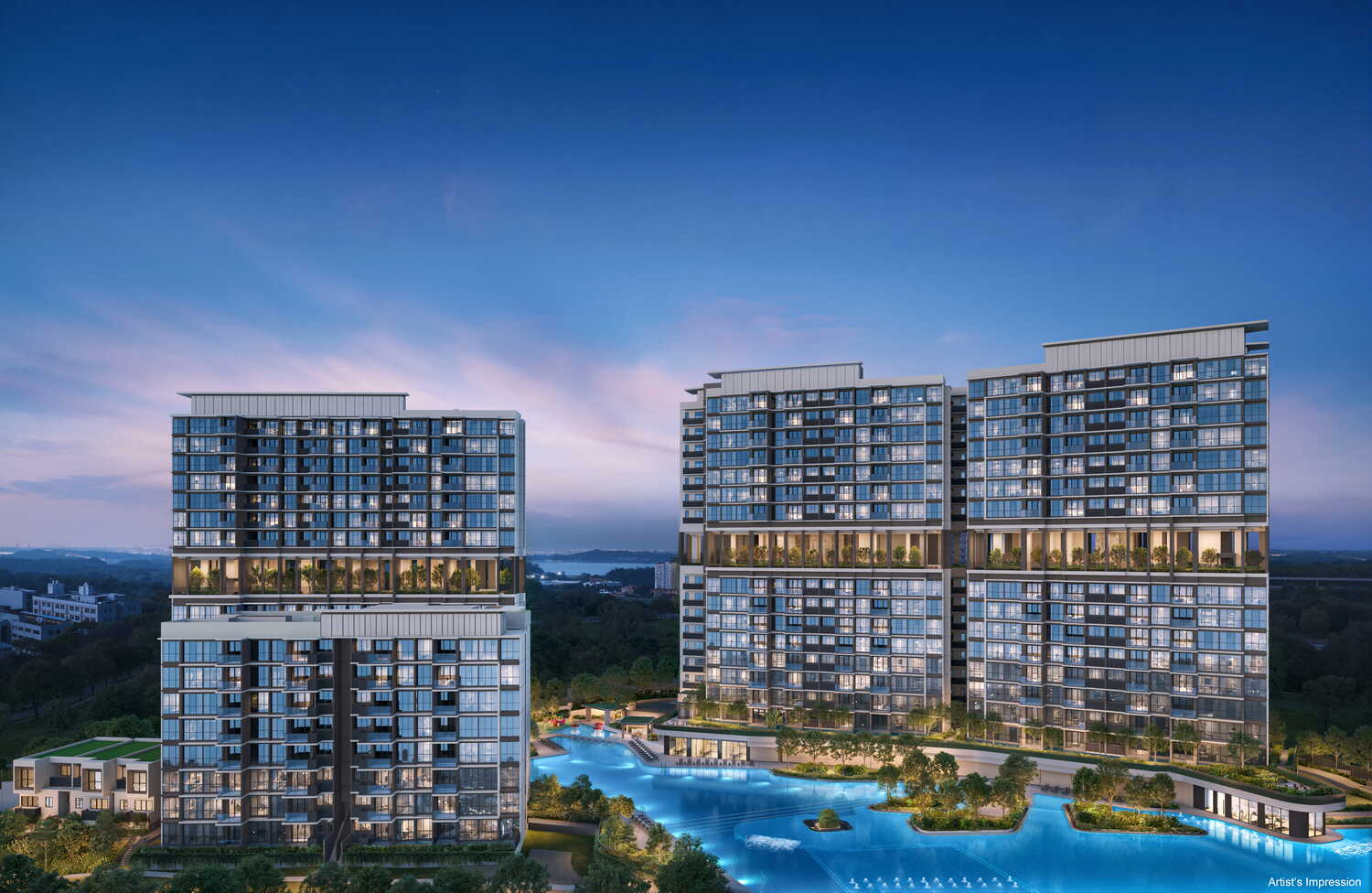
Explore the architectural renderings and design concepts for Lentor Gardens Residences. These images showcase the development's modern aesthetic, landscaping, and integrated amenities.
Disclaimer
The information provided on this website is for educational and informational purposes only. It should not be construed as financial advice, investment advice, or a recommendation to buy or sell any property. Property investment carries inherent risks, and past performance does not guarantee future results.
For educational and discussion purposes only. Does not constitute financial, legal, or investment advice. All PSF figures are analyst estimates or publicly sourced resale data and have not been confirmed by the developer. Past performance of comparable projects is not indicative of future results.
Always consult with qualified professionals, including financial advisors, legal counsel, and property agents, before making any property investment decisions. Jamus Lee and JamusProperty.com are not liable for any direct or indirect losses resulting from the use of information on this website.