15 min read • Last updated July 2026
The Government Land Sales (GLS) programme is the heartbeat of Singapore's private residential market. For property investors, HDB upgraders, and homebuyers, tracking upcoming GLS sites is not merely an academic exercise — it is the most reliable leading indicator of future condo launch prices, supply dynamics, and neighbourhood transformation. Every new launch condominium begins as a GLS land bid, and the price a developer pays today establishes the absolute minimum price floor for the units they will sell tomorrow.
In this comprehensive guide, we dissect the mechanics of the GLS programme, analyse recent winning bids, and evaluate the most anticipated upcoming GLS sites across Woodlands, Hougang, Bedok, Bayshore, and Lentor. By understanding how land costs translate into launch prices, you can identify the best investment opportunities before the broader market catches on.
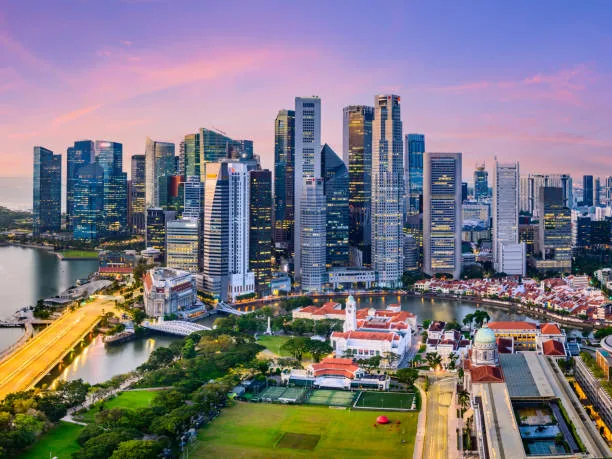 Singapore's private residential market is shaped by the biannual GLS programme, which releases state land for private development.
1. What is the GLS Programme?
The Government Land Sales (GLS) programme is the primary mechanism through which the Singapore government releases state land for private development. Managed by the Urban Redevelopment Authority (URA) and announced biannually (for 1H and 2H of each year), the programme is designed to ensure a steady pipeline of private housing, commercial spaces, and hotel rooms to meet economic and demographic needs.
The GLS programme operates through two distinct mechanisms: the Confirmed List and the Reserve List. Sites on the Confirmed List are scheduled for public tender at predetermined dates, regardless of prevailing market conditions. This guarantees a baseline supply of land for developers even during periods of market softness. Conversely, sites on the Reserve List are only released for tender if a developer submits an application with a minimum bid price acceptable to the government — typically around 85% of the Chief Valuer's estimated market value. A Reserve List activation is a powerful signal of strong developer conviction in a specific submarket, as it requires a developer to commit capital before the formal tender even begins.
The government reviews and adjusts the GLS programme every six months, calibrating supply to match housing demand, economic conditions, and long-term planning objectives. This makes each GLS announcement a closely watched policy signal for the entire property market.
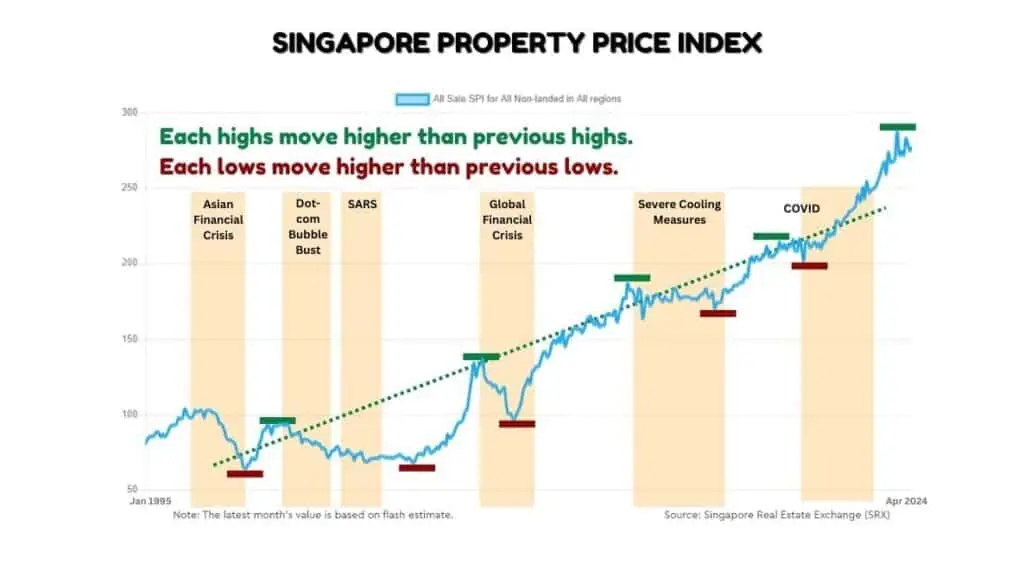 Singapore's private residential price index has consistently trended upward over the long term, with GLS land costs as a key driver of each new cycle.
2. Why GLS Sites Matter
For property buyers, GLS sites matter because they mathematically dictate future property prices. The metric used to evaluate land cost is the price per square foot per plot ratio (psf ppr). This figure represents the raw land cost per unit of developable floor area, before a single brick is laid.
Developers operate on a straightforward economic model: the minimum viable launch price is calculated by combining the land cost (psf ppr), construction costs (currently estimated between $350 and $500 psf in 2026), financing, and a typical developer profit margin of 10% to 15% of Gross Development Value. Therefore, a high land bid establishes a hard price floor that cannot be negotiated away. If a developer pays $1,300 psf ppr for a site with a plot ratio of 1.6, the land cost alone translates to approximately $2,080 psf of gross floor area. Add construction and margin, and the minimum launch price approaches $2,500 psf.
Furthermore, GLS bids create a ripple effect throughout the surrounding submarket. When a new site is awarded at a record high price, developers of existing nearby projects often adjust their prices upward to match the new benchmark, and resale prices in the vicinity naturally follow suit. Understanding this dynamic allows astute buyers to purchase properties in the "pre-GLS window" — securing units at lower historical land costs before a new, more expensive neighbour reprices the entire estate. For a deeper look at how to leverage this dynamic, explore our Asset Progression methodology.
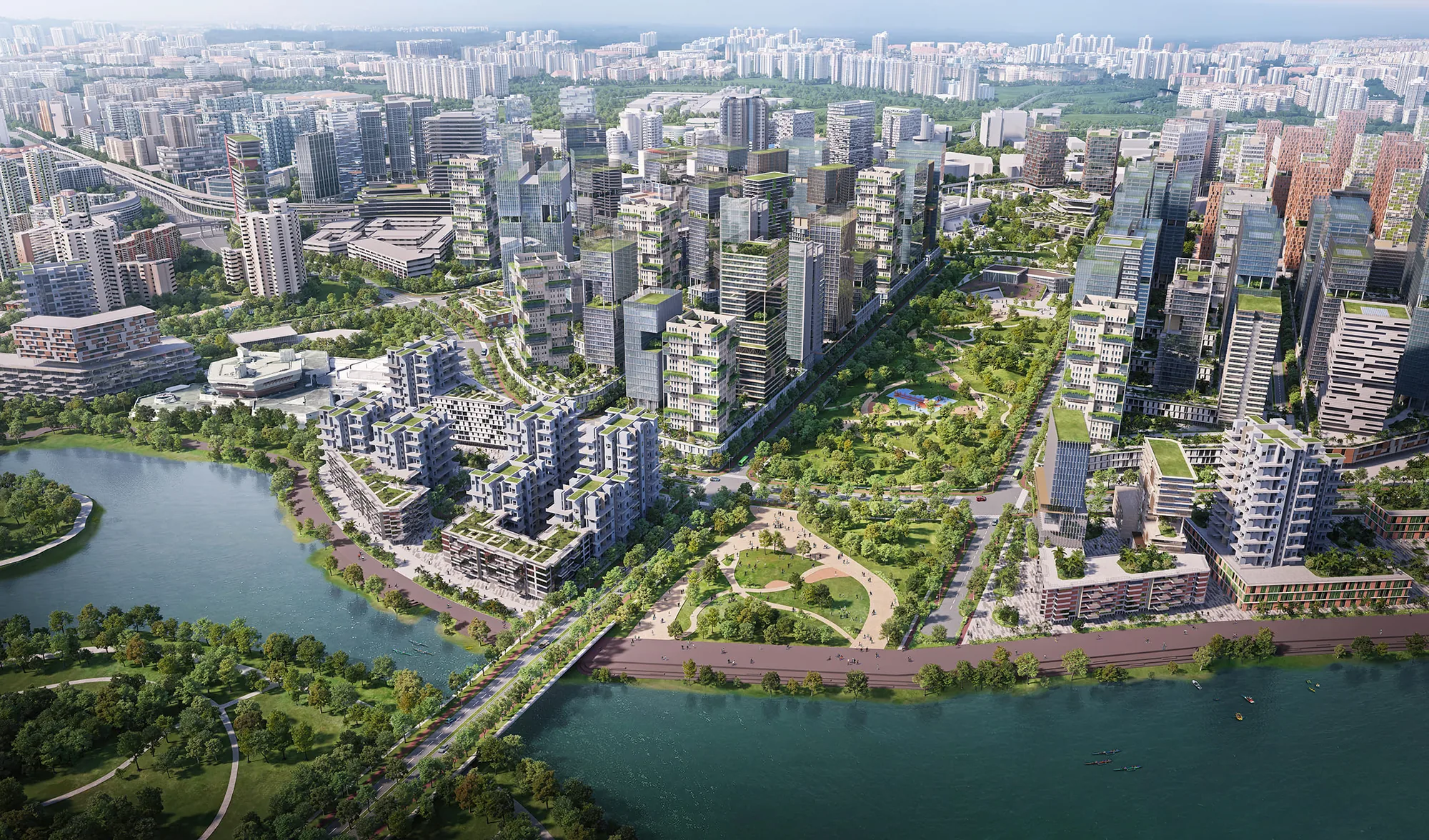 Singapore's long-term urban masterplan designates new residential precincts across the island, with GLS sites serving as the primary mechanism for releasing land to developers.
3. Current GLS Sites to Watch
The 2025 and 2026 GLS programmes have introduced a substantial supply of new private homes. The 2H2026 programme, announced on 3 June 2026, offers 9,200 private residential units across Confirmed and Reserve List sites. The Confirmed List alone features nine sites capable of yielding approximately 4,745 residential units, reflecting the government's commitment to sustaining adequate housing supply and moderating price growth.
With the 2H2026 injection, the overall private residential pipeline in Singapore rises to approximately 61,000 units — a level the government considers consistent with market balance, given Singapore's typical absorption rate of 8,000 to 12,000 units per year.
Several key sites stand out due to their strategic locations, integration with transport nodes, and potential to reshape their respective neighbourhoods. The table below provides a snapshot of the most significant upcoming GLS sites across the pipeline.
| Site | Region | Est. Units | Type | Est. Launch |
|---|---|---|---|---|
| Bayshore Drive GLS | OCR (Bedok) | 1,280 | Integrated Condo | 1H 2028 |
| New Upper Changi Road GLS | OCR (Bedok) | 1,040 | Condo | 1H 2028 |
| Hougang Central | OCR (Hougang) | 835 | Integrated Condo | 2H 2026 |
| Springleaf Residence | OCR (Yishun) | 940 | Condo | 2H 2026 |
| Lentor Central Plot 4 | OCR (Ang Mo Kio) | 580 | Condo | 2H 2027 |
| Woodlands Drive 17 EC (Plot 2) | OCR (Woodlands) | 560 | EC | Mar/Apr 2027 |
| Bedok Rise | OCR (Bedok) | 380 | Condo | 2H 2027 |
| Lentor Gardens Residences | OCR (Ang Mo Kio) | 500 | Condo | Jul 2026 |
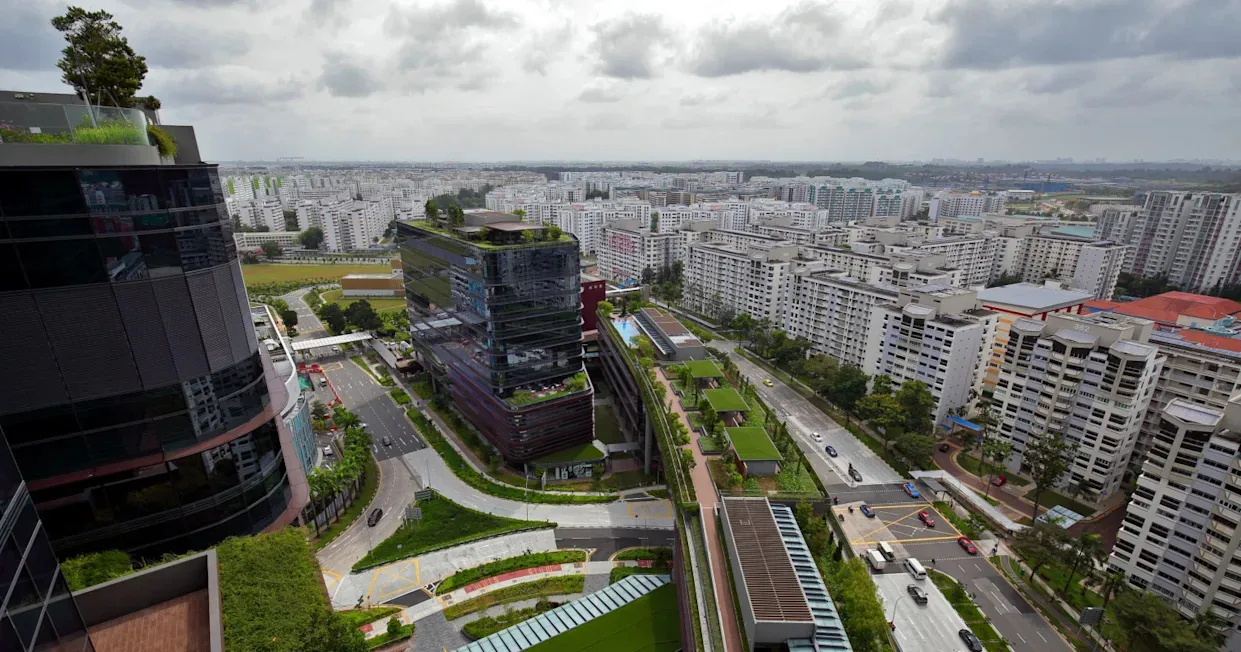 Woodlands North is undergoing a major transformation, anchored by the upcoming RTS Link at Woodlands North MRT station and a wave of new EC developments.
4. Woodlands GLS Sites
Woodlands is undergoing a significant transformation, driven by its designation as the largest economic hub in the North region and the impending completion of the Johor-Singapore Rapid Transit System (RTS) Link at Woodlands North station. The residential pipeline here is heavily focused on Executive Condominiums, catering to a massive pool of HDB upgraders from Woodlands, Sembawang, and Yishun who have been waiting for a new EC option closer to home.
The most notable recent tender was for the Woodlands Drive 17 EC sites. The first plot was awarded to City Developments Limited (CDL) in August 2025 at $782 psf ppr. In a highly competitive follow-up, the adjacent second plot was awarded to Sim Lian Group in January 2026 for a record-breaking $794 psf ppr — a new benchmark for EC land rates in Singapore. The razor-thin margin between bids (just 0.4%) underscores the intense developer competition for this submarket.
The demand case for Woodlands ECs is compelling. Over 2,700 four- and five-room HDB flats across Woodlands, Sembawang, and Yishun are expected to reach their Minimum Occupation Period (MOP) between 2026 and 2027, creating a large pool of upgraders who have been waiting for an EC option. These two upcoming EC developments will add around 980 EC homes to the North, with launch prices projected to range between $1,750 and $2,000 psf. If you are considering a move to the North, Chencharu Grand in nearby Yishun is another well-positioned new launch worth evaluating alongside the Woodlands EC pipeline.
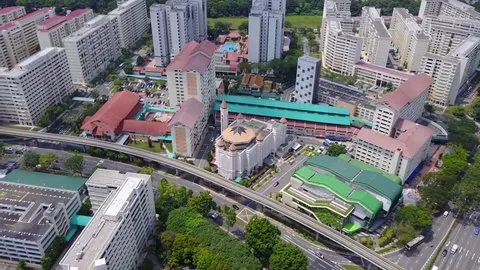 Hougang is one of Singapore's most populous mature estates, with nearly 230,000 residents and historically low private retail space per capita — a structural demand gap the new integrated development will address.
5. Hougang GLS Sites
Hougang has long been a mature and highly sought-after residential estate, but it has experienced a drought of large-scale new launches in recent years. This changed dramatically with the award of the Hougang Central GLS site — a massive mixed-use parcel located directly above the Hougang MRT station and bus interchange.
Awarded in January 2026 to a consortium comprising CapitaLand Integrated Commercial Trust (CICT), CapitaLand Development (CLD), and UOL Group for approximately $1.5 billion ($1,179 psf ppr), this site is set to become the defining landmark of the precinct. The development will feature approximately 830 residential units and a 300,000 sq ft retail mall — the largest in Hougang. This is the first GLS parcel in the Hougang area since 2019, making it a transformative milestone.
The strategic rationale for this development is rooted in demographics. Hougang ranks among Singapore's most populous precincts, with nearly 230,000 residents, yet its private retail space per capita stands at just 2.8 sq ft — significantly below the national average of 11.4 sq ft. The integration with the North-East Line and the future Cross Island Line (expected by 2030) positions this project as a premier transport hub for the entire northeast region.
For investors, the Hougang Central Residences development offers a dual opportunity: the residential component benefits from a captive tenant pool drawn to integrated convenience, while the commercial component, owned by CICT, is expected to deliver a yield on cost of over 5%. Launch prices for the residential units are expected to set a new benchmark for the OCR market. To understand how integrated developments fit into a broader wealth-building strategy, visit our page on Asset Progression.
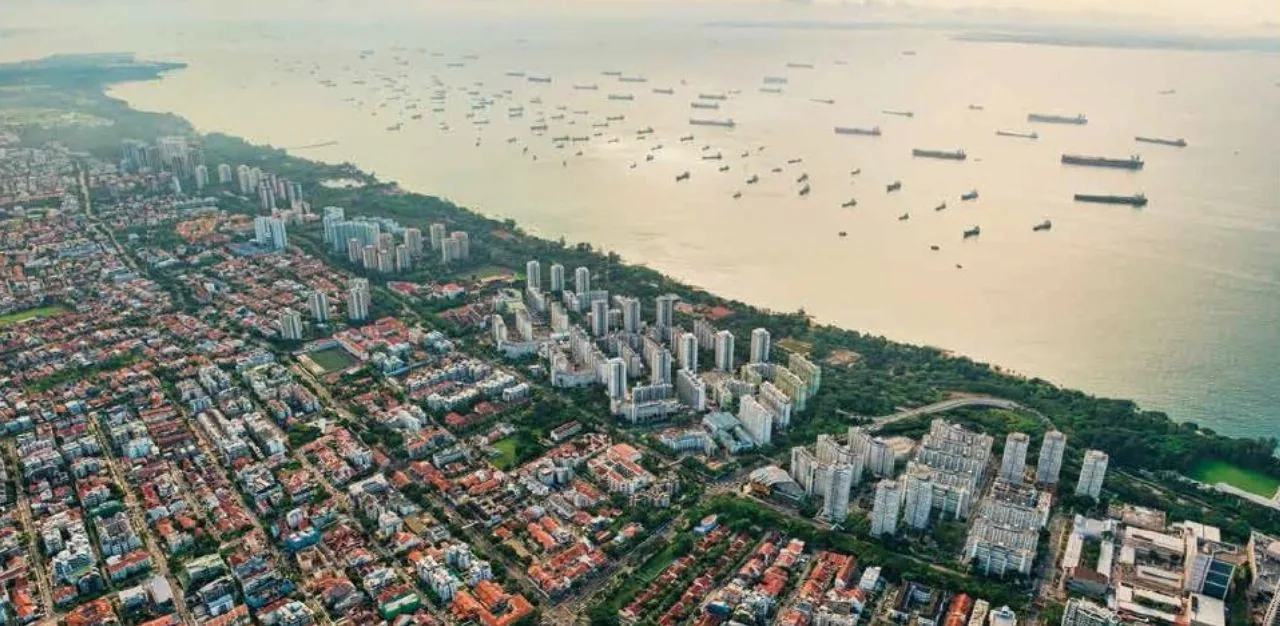 The Bedok district and East Coast corridor are seeing renewed developer interest, driven by MRT access, proximity to Changi Business Park, and the upcoming Bayshore waterfront precinct.
6. Bedok GLS Sites
The Bedok planning area is seeing renewed interest, particularly around established transport nodes. Two key GLS sites are reshaping the district's residential landscape.
The Bedok Rise GLS site, launched in late 2025, is a prime example of a site where scarcity commands a premium. Situated adjacent to the Tanah Merah MRT station on the East-West Line, it is the last available residential plot in the immediate vicinity with doorstep train access. The tender drew intense competition, attracting ten bids — a strong signal of developer confidence. The site was ultimately awarded to Allgreen Properties (under Bellis Residential Pte. Ltd.) for $464.8 million, translating to a land rate of $1,330 psf ppr.
| Rank | Tenderer | Bid Price ($) | Land Rate (psf ppr) |
|---|---|---|---|
| 1 | Bellis Residential (Allgreen) | $464,800,000 | $1,330 |
| 2 | Hoi Hup Realty | $462,800,000 | $1,324 |
| 3 | ABR/LWH/Macly/RP Ventures | $451,288,889 | $1,291 |
| 4 | Intrepid/Garden Estates/TID | $443,873,890 | $1,270 |
| 5 | Winnex Investment | $441,999,999 | $1,265 |
The $1,330 psf ppr land rate is among the highest GLS bids for a residential-only site in the OCR, reflecting the site's unique status as the last plot with doorstep Tanah Merah MRT access. The project — now marketed as Bedok Rise Residences — is expected to yield approximately 380 units and launch at an average price of at least $2,500 psf. The upcoming transformation of Tanah Merah MRT into a Thomson-East Coast Line interchange by the mid-2030s adds a further layer of long-term capital appreciation potential.
The larger New Upper Changi Road GLS site, part of the 1H2026 Confirmed List, offers a different proposition — scale. With an estimated yield of 1,040 units, this site will be one of the largest new launch condominiums in the Bedok district in recent years, expected to launch in 1H 2028. For a full overview of all major new launches across Singapore, see our Upcoming Condo Launches Singapore 2026 guide.
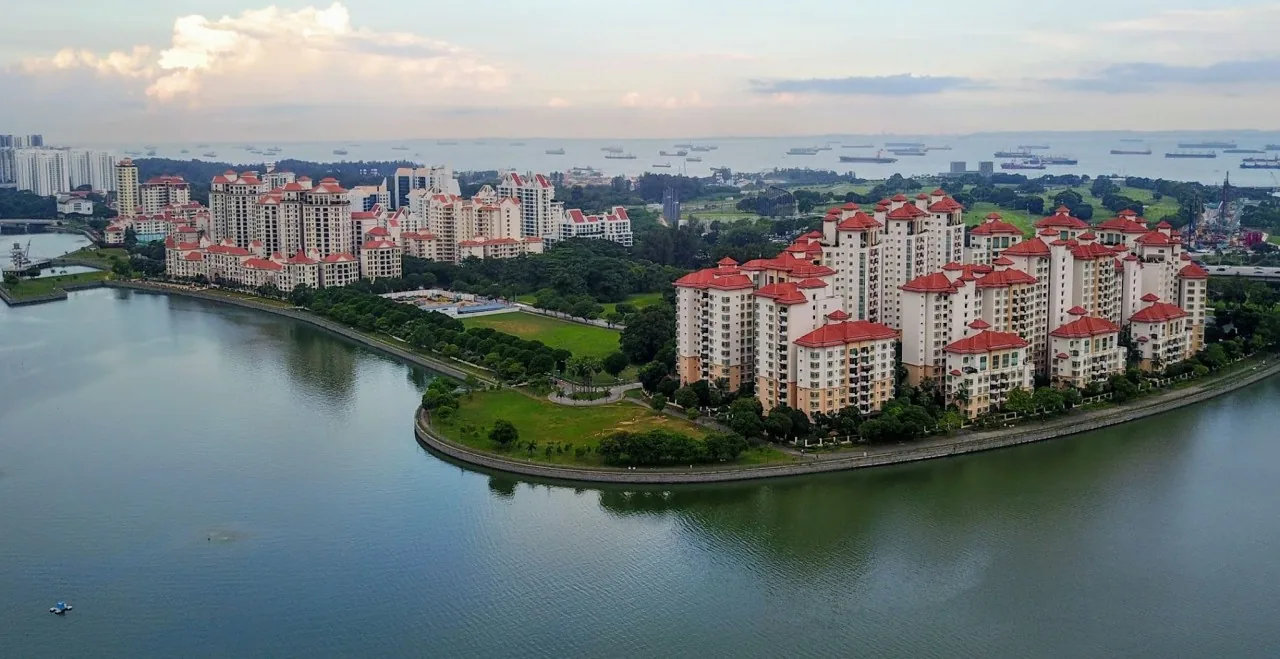 The Bayshore and Tanjong Rhu waterfront corridor represents Singapore's most exciting new residential frontier, combining coastal living with direct MRT access and long-term precinct transformation.
7. Bayshore GLS Sites
The Bayshore precinct represents one of the most ambitious coastal transformations in Singapore's East Coast. Envisioned as a 60-hectare waterfront estate, Bayshore is planned to eventually house 12,500 homes, blending public and private housing with lifestyle amenities along the coastline.
The centrepiece of this new precinct is the Bayshore Drive GLS site, a mega mixed-use development integrated with the Bedok South MRT station on the Thomson-East Coast Line. Launched in March 2026, this massive 5.74-hectare plot can yield approximately 1,280 homes alongside a substantial retail component comparable in size to White Sands Shopping Mall in Pasir Ris. The commercial component is expected to serve both residents and the wider Bayshore and Bedok South areas, where retail offerings are currently limited.
The Bayshore Drive site is the only mixed-use site within the Bayshore waterfront neighbourhood under the Master Plan 2025, meaning it will serve as the central hub for the entire precinct. The first residential GLS site in Bayshore — the Bayshore Road plot — was awarded in March 2025 to a SingHaiyi-led consortium at $1,388 psf ppr, setting a new benchmark for OCR residential land prices. The resulting project, Vela Bay, launched in April 2026.
Early estimates suggest the Bayshore Drive tender could attract bids between $1.9 billion and $2.1 billion, translating to a land rate of $1,200 to $1,300 psf ppr. The complexity of building above an MRT station is expected to limit participation to well-capitalised developers, likely in joint venture arrangements. This development will be a defining project for East Coast buyers seeking integrated convenience and waterfront living, with the added long-term upside from the proposed Long Island Project, which aims to create new land and waterfront parks along Singapore's southern coastline. For buyers interested in the broader East Coast corridor, Tanjong Rhu Grand offers a compelling RCR waterfront alternative that is available now.
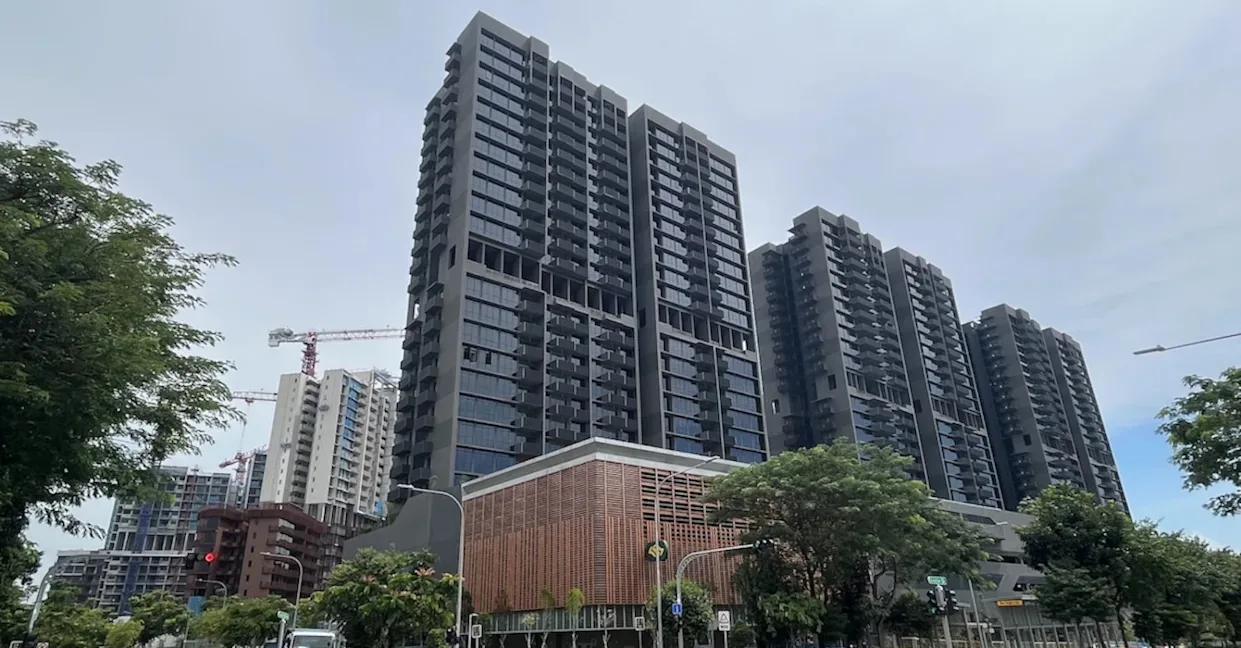 The Lentor Hills cluster has been transformed by a series of GLS awards since 2022, establishing an operational neighbourhood with retail amenities, schools, and Thomson-East Coast Line connectivity.
8. Lentor GLS Sites
The Lentor Hills estate is a textbook example of how new MRT infrastructure can rapidly transform a quiet residential enclave into a bustling new launch cluster. Following the opening of the Lentor MRT station (TE6) on the Thomson-East Coast Line, the government released a rapid succession of GLS sites, resulting in a concentrated wave of development that has fundamentally repriced the corridor.
Between 2022 and 2024, projects like Lentor Modern, Lentor Hills Residences, Lentor Gardens, and Lentor Mansion established the precinct, with launch prices steadily climbing from approximately $1,920 psf to over $2,200 psf. The integrated retail podium at Lentor Modern — featuring a Cold Storage supermarket, hawker centre, and childcare centre — serves as the critical amenity anchor for the entire cluster. Resale caveats for Lentor Modern have been recorded at $2,000 to $2,400 psf, representing 8% to 29% capital appreciation before TOP.
The upcoming Lentor Gardens Residences, expected to preview in mid-2026, represents the culmination of this development wave. With an indicative launch price of $2,100 to $2,300 psf, it offers buyers access to an established neighbourhood with operational amenities and proximity to CHIJ St. Nicholas Girls' School — one of Singapore's top SAP girls' schools. For investors, the lack of immediate new GLS supply in the pipeline suggests that prices in the Lentor cluster will remain resilient.
Beyond the immediate cluster, the Lentor Central Plot 4 (580 units, expected 2H 2027) and Lentor Central Plot 3 (560 units, expected 2H 2026) will continue to add supply to the precinct, but the overall development programme is nearing completion, which structurally supports price stability for early buyers. Those seeking a comparable Thomson corridor address with immediate availability may also wish to explore Thomson Reserve, a large-scale new launch in District 20. For the latest market data on this corridor, see our Exclusive Condo Insights 2026.
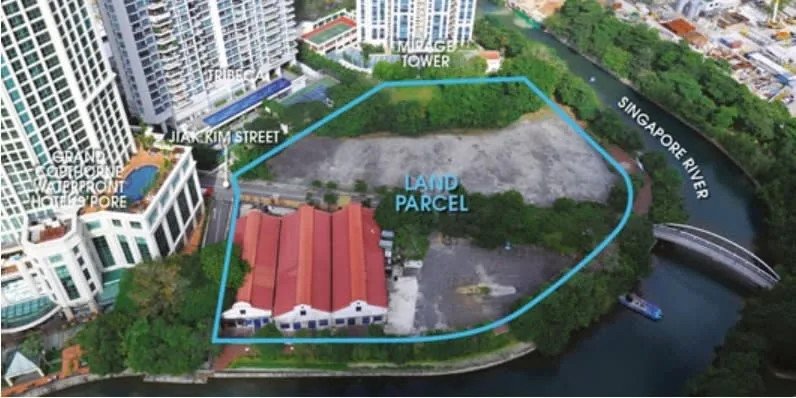 GLS tender sites attract intense competition from major developers, with winning bids setting the price benchmarks that flow through to new launch condominiums.
9. Recent Winning Bids and Analysis
Analysing recent winning bids reveals clear trends in developer sentiment and market direction. Despite macroeconomic uncertainties, developers continue to bid aggressively for sites with strong fundamental attributes — specifically, those near MRT stations, within established educational catchments, or featuring integrated commercial components. Several of these awarded sites have already translated into live new launches that buyers can view today.
| Project / Site | Region | Winner | Top Bid (psf ppr) | Est. Launch PSF |
|---|---|---|---|---|
| Hougang Central | OCR | CICT, CLD, UOL | $1,179 | $2,400 – $2,600 |
| Bedok Rise | OCR | Allgreen Properties | $1,330 | $2,500+ |
| Woodlands Drive 17 (Plot 2) | OCR | Sim Lian Group | $794 (EC) | $1,750 – $2,000 |
| Tanjong Rhu Road | RCR | CDL & Woh Hup | $1,455 | $2,700 – $3,100 |
| Dairy Farm Walk | OCR | Roxy-Pacific Consortium | $962 | $2,100 – $2,200 |
| Holland Link | CCR | Sim Lian Group | $1,432 | $2,800 – $3,200 |
The record-breaking bid of $1,455 psf ppr for the Tanjong Rhu Road site in the RCR signals that developers retain strong conviction in Singapore's residential market fundamentals, even at elevated price levels. Collectively, these bids confirm that average GLS land prices in 2025 were approximately 10% higher than in 2024, and early 2026 data suggests a further 13% uplift year-on-year. This trajectory makes it clear that new launch prices will remain elevated across all market segments.
10. How GLS Land Prices Affect Condo Prices
The relationship between GLS land prices and final condo launch prices is direct and unyielding. The formula is straightforward:
When developers pay premium prices for land, they cannot absorb the cost — it must be passed on to the buyer. This creates a hard price floor. For instance, bids exceeding $1,500 psf ppr in the Core Central Region (CCR) necessitate launch prices above $3,500 psf. In the Rest of Central Region (RCR), land costs of $1,200 to $1,400 psf ppr translate to launches between $2,600 and $3,200 psf. For the Outside Central Region (OCR) at $900 to $1,100 psf ppr, expect launches between $2,100 and $2,500 psf.
More importantly, high GLS bids trigger a submarket repricing effect. When a new site is awarded at a higher cost than historical averages, neighbouring projects — both unlaunched and existing resale units — often adjust their asking prices upward. This "price umbrella" effect means that waiting for future launches usually results in paying more for a similar product in the same location. The most sophisticated buyers act in the pre-GLS window, securing units at prices anchored to older, lower land costs before the next benchmark-setting tender resets the market. To understand how to time your entry strategically, explore our Asset Progression framework. For the full cost stack behind these figures, and why land is only about half of what a project costs to build, see how a GLS land bid becomes a launch price.
 New launch condominiums in Singapore's GLS pipeline offer a range of lifestyle amenities — from integrated retail and MRT connectivity to resort-style facilities — tailored to both families and investors.
11. Best GLS Sites for Homebuyers
For owner-occupiers and families, the best GLS sites are those that offer a combination of MRT convenience, educational access, and lifestyle amenities.
The Lentor Hills cluster, particularly the upcoming Lentor Gardens Residences, remains a top choice for families. The operational Lentor Modern mall provides immediate convenience, the Thomson-East Coast Line ensures seamless connectivity to the CBD, and proximity to CHIJ St. Nicholas Girls' School secures long-term educational benefits. The fact that the GLS programme for this cluster is largely complete also means buyers are not paying for speculative future amenities — everything is already built. For families who prefer the Thomson corridor, Thomson Reserve is a compelling large-scale alternative in District 20.
For HDB upgraders seeking affordability without compromising on space, the Woodlands Drive 17 EC sites present a compelling proposition. Priced significantly lower than private condominiums, these ECs offer a viable pathway to private homeownership while benefiting from the broader regional transformation of the Woodlands North Coast and the future RTS Link connectivity. Upgraders in the northeast who prefer a private condo option may also consider Hougang Central Residences, which offers integrated living at a mature estate location.
For buyers who prioritise waterfront living and long-term precinct growth, the Bayshore Drive GLS development offers an early-mover opportunity in a brand-new estate. Buyers who enter at the initial launch phase of a new precinct have historically benefited from the strongest capital appreciation as the neighbourhood matures.
Not sure which development fits your profile? Whether you are an HDB upgrader, first-time buyer, or seasoned investor, a personalised analysis of your timeline and budget can identify the right entry point. Schedule a free strategy session with Jamus today.
12. Best GLS Sites for Investors
Investors should target sites with strong rental catchments, unique locational advantages, or significant master plan catalysts that will drive long-term demand.
The Hougang Central Residences mixed-use development is a standout investment opportunity. Integrated developments consistently command a proven price premium and exhibit strong tenant demand due to unparalleled convenience. Its position as a future interchange for the Cross Island Line further solidifies its long-term capital appreciation potential. The large resident catchment of 230,000 people in Hougang, combined with the currently low private retail space per capita, creates a structural demand floor for the commercial component that will support the entire development's value.
Similarly, the Bayshore Drive GLS site offers early-mover advantage in a massive new waterfront precinct. As the central integrated hub of the Bayshore Master Plan, this development will anchor the neighbourhood, making it highly attractive to tenants and future resale buyers who value coastal living with direct MRT access. The Long Island Project adds a speculative but potentially transformative long-term upside. Investors seeking a live RCR waterfront option today can explore Tanjong Rhu Grand, which sits along the Singapore River and benefits from a similarly strong tenant profile.
For investors seeking a more established market, Bedok Rise Residences offers a compelling rental yield story. Its doorstep access to Tanah Merah MRT — soon to become a Thomson-East Coast Line interchange — and proximity to Changi Business Park and Changi Airport creates a deep and stable tenant pool of aviation and logistics professionals. Investors looking for a comparable OCR yield play in the north may also consider Dunearn House. For a full breakdown of market data supporting these investment theses, visit our Exclusive Condo Insights 2026.
13. Future Government Plans
The government's long-term vision for Singapore's residential landscape is outlined in the URA Master Plan 2025, gazetted in December 2025. A key focus is the decentralisation of economic activity and the creation of vibrant regional hubs that reduce the concentration of employment in the Raffles Place and Marina Bay corridor.
The most significant initiative is the development of the Jurong Lake District (JLD) as Singapore's second Central Business District. The release of the massive JLD white site in the 2H2026 GLS programme — capable of yielding 1,200 homes and a minimum of 40,000 sqm of Grade A office space — signals a major acceleration of this plan. Infrastructure investments including the Jurong Region Line (opening from approximately mid-2028) and the Cross Island Line Phase 2 (expected approximately 2032) are already underway, significantly enhancing the district's attractiveness to both commercial occupiers and residential buyers.
The Master Plan also identifies new housing frontiers. The progressive transformation of Bukit Timah Turf City into a new housing estate woven with greenery and heritage is underway, with preparatory works commencing in the near term. Similarly, the former Singapore Racecourse in Kranji is slated for redevelopment as a vibrant new housing estate, with a consultancy tender for the detailed master plan expected to be called in 2026. These future sites will eventually feature in upcoming GLS programmes, offering new frontiers for property investment. In the meantime, buyers seeking a nature-adjacent address in the north can explore Chencharu Grand in Yishun, which sits adjacent to the Chencharu green corridor.
For more insights into the upcoming residential pipeline, explore our guide on Upcoming Condo Launches Singapore 2026.
Further reading: Three of the pipeline's most significant sites get full deep-dives: the Bayshore Drive waterfront hub, the Chencharu Close integrated development in Yishun, and the Hougang Central GLS site.
14. Frequently Asked Questions
What is psf ppr in a GLS tender?
PSF ppr stands for price per square foot per plot ratio. It is the standardised metric used to measure land cost in Singapore GLS tenders, calculated by dividing the total land bid by the site area and then by the plot ratio. This allows fair comparison across sites of different sizes and densities.
How does a high GLS bid affect the surrounding property market?
A high GLS bid sets a new price floor for the area. It typically causes developers of nearby unlaunched projects to raise their prices and lifts the valuation of existing resale properties in the vicinity — a phenomenon known as the price umbrella effect. Buyers who purchase before the new benchmark is set benefit from the repricing.
What is the difference between the Confirmed List and the Reserve List?
Confirmed List sites are launched for tender at scheduled dates regardless of market demand, ensuring a baseline supply of land. Reserve List sites are only triggered for tender when a developer submits an acceptable minimum bid, serving as a flexible supply buffer that is activated by real developer appetite.
Why are integrated developments like Hougang Central more expensive?
Integrated developments offer seamless connectivity to transport nodes (MRT and bus interchanges) and retail malls. This unparalleled convenience commands a premium from both buyers and tenants, justifying higher land bids and launch prices. Historically, integrated developments in Singapore have also demonstrated stronger capital appreciation and more resilient resale values.
How many GLS sites are in the current pipeline?
As of June 2026, Singapore's overall private residential pipeline stands at approximately 61,000 units, encompassing units under construction, those with planning approvals, and those with awarded GLS land. The 2H2026 programme contributes approximately 4,745 units from the Confirmed List alone.
15. Conclusion
Tracking upcoming GLS sites is the most effective strategy for anticipating the future of Singapore's property market. The data is unambiguous: land costs dictate launch prices, and developers are continuing to bid aggressively for prime sites across all regions. Average GLS land prices have risen approximately 10% year-on-year in 2025, with early 2026 data pointing to a further 13% uplift — a trajectory that guarantees continued upward pressure on new launch prices.
Whether you are looking at the integrated convenience of Hougang Central Residences, the waterfront potential of Bayshore, the family-friendly appeal of Lentor Gardens Residences, or the value proposition of Woodlands ECs, understanding the underlying land economics gives you a crucial informational edge. The GLS data is public, and every tender result is a data point that reveals where prices are heading. By acting decisively during the pre-GLS window, buyers and investors can secure prime assets before the next wave of benchmark-setting prices reshapes the market.
For a holistic view of how GLS data fits into a broader property wealth strategy, visit the JamusProperty.com homepage or explore our Asset Progression framework. To compare all active new launches side by side, see our Upcoming Condo Launches Singapore 2026 guide.
Want a clear-eyed analysis of how GLS land economics apply to your specific situation? Whether you are an HDB upgrader, investor, or international buyer — reach out for a consultative discussion tailored to your timeline, budget, and goals.
Disclaimer
Please note that the property names used on this website are based on road names from Government Land Sales (GLS) sites or en bloc sales, and may not reflect the official names of the developments. These provisional names are provided for reference only and may differ from the final official names.
All calculations, figures, prices, and costs displayed on this website are for illustrative purposes only and do not represent the actual or final selling prices of the developments.
We are committed to accuracy and transparency; however, the information provided should not be regarded as an offer, statement, representation, or guarantee. While we strive to ensure the information is correct, it may not always be complete, up to date, or free from errors. Users are strongly encouraged to exercise due diligence and verify details through direct inquiries. Our agents and this website shall not be held liable for any decisions or actions taken based on the information provided here.
Disclaimer: This article is provided for informational purposes only and should not be construed as financial advice, investment advice, or a recommendation to buy or sell any property. Property investment carries inherent risks, and past performance does not guarantee future results. Always consult with qualified professionals, including financial advisors, legal counsel, and property agents, before making any property investment decisions. Jamus Lee and JamusProperty.com are not liable for any direct or indirect losses resulting from the use of information on this website.